Language: 日本語 | English
Language: 日本語 | English
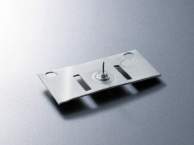
We offer VA (Value Analysis) proposals to significantly reduce costs by integrating pin forming within progressive press molds and converting conventionally machined components into press-processed parts.
If it involves progressive deep drawing, we are ready to meet your needs.
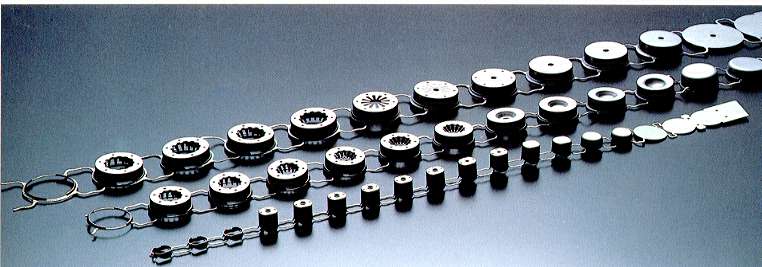
With over 60 years of experience, our company—once recognized as one of the three major players in this field—has built its core business around precision progressive deep drawing molds, leveraging decades of expertise.
We offer a vertically integrated solution through Nissin Precision Machines Co., Ltd and its group companies, addressing various challenges faced by our customers with:
1. Micron-level precision machining of mold components using the latest NC machine tools
2. Design, development, and manufacturing of progressive and deep drawing precision press molds
3. Press stamping services at our two domestic factories and four overseas facilities
Our comprehensive in-house capabilities ensure high precision, efficiency, and reliability in precision deep drawing press processing.
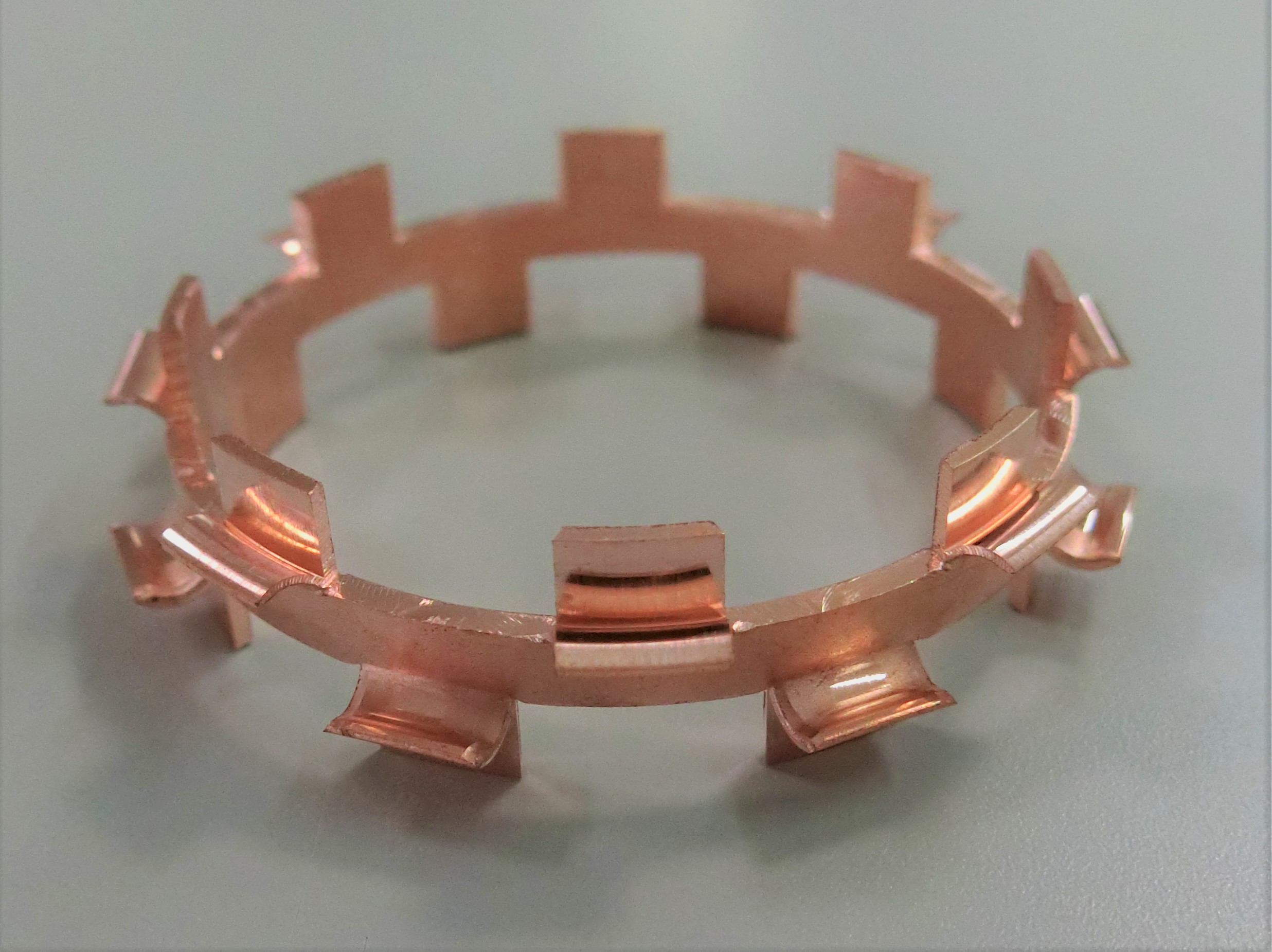
[Outer Perimeter Warizaki] Method
A three-dimensional integrally molded piece is formed from a single plate.
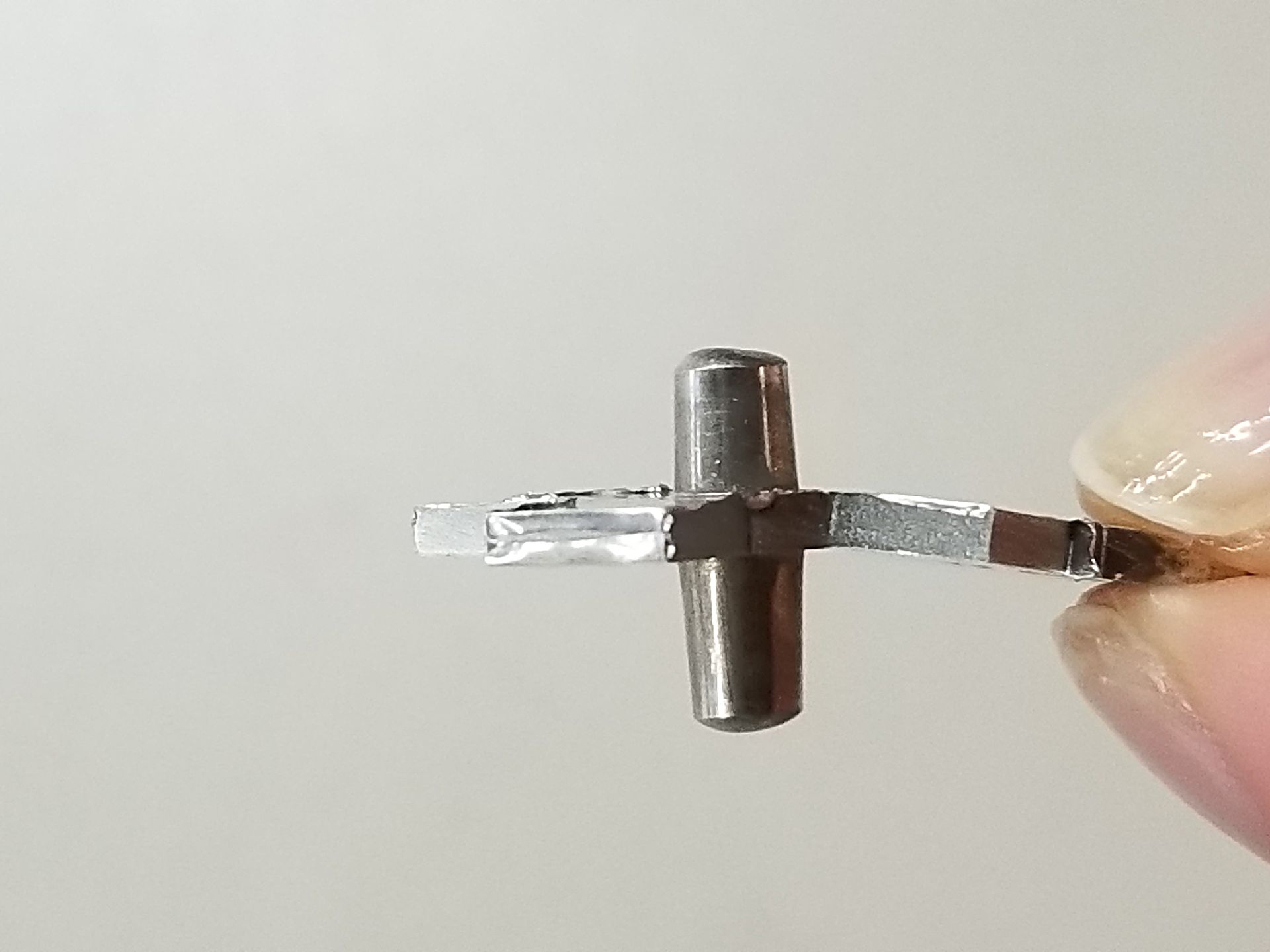
Achieves solid projections on both sides of a thin plate (photo held by hand) in a single press operation.
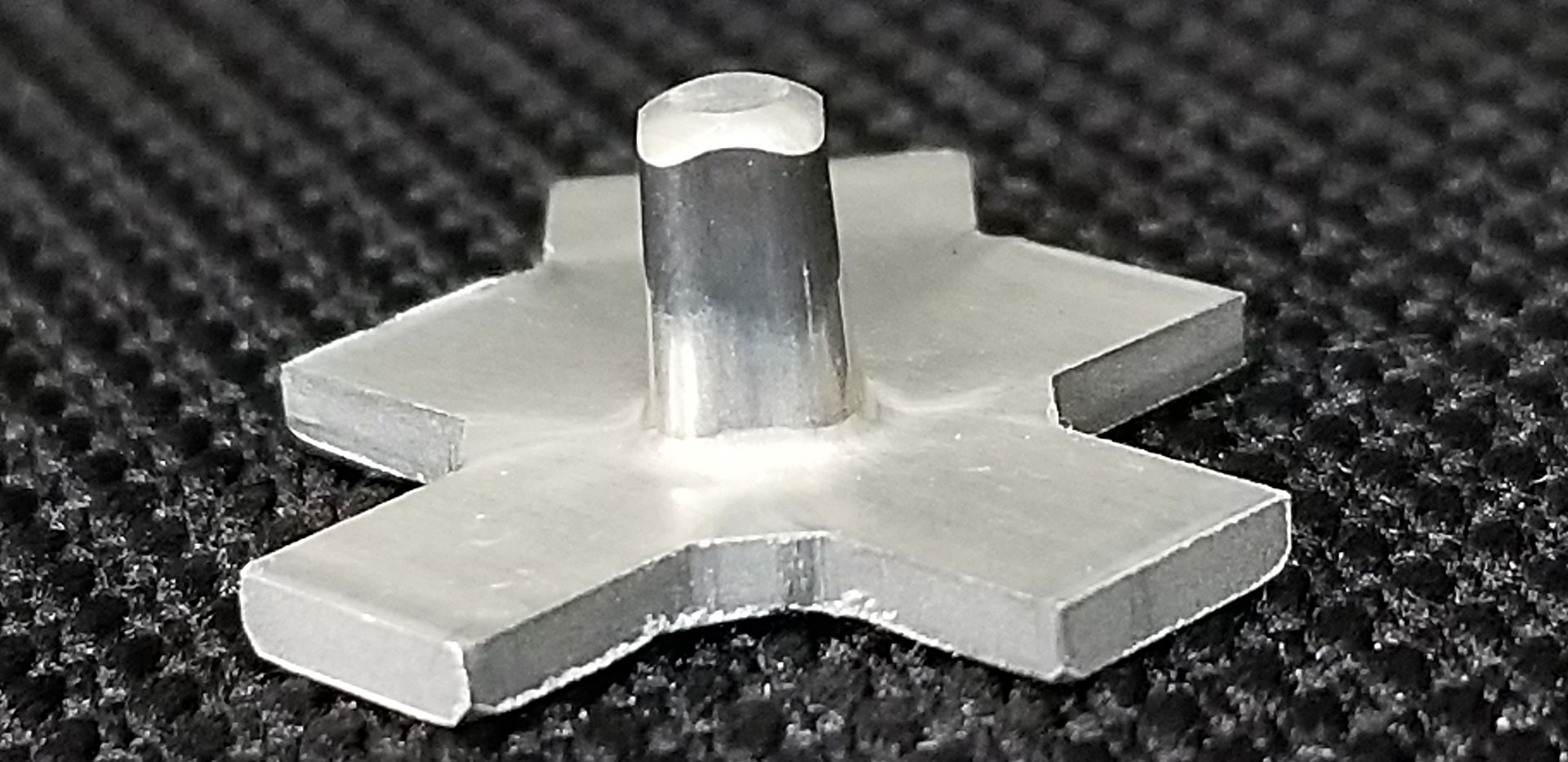
ONLY ONE Processing Technology [Turm Method]
Achieves solid rectangular column projections on a thin plate in a single process.
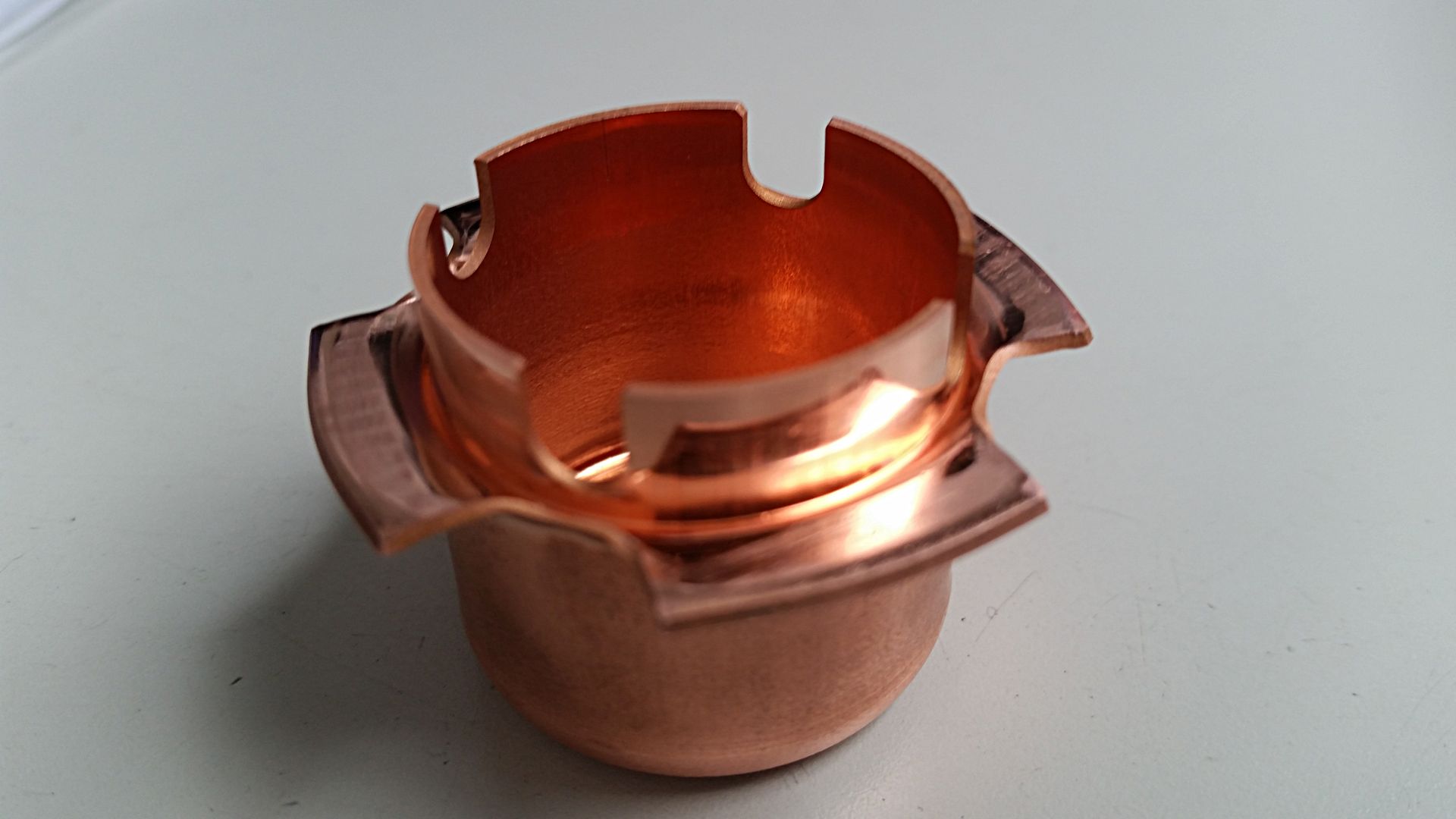
ONLY ONE Processing Technology [Outer Perimeter Warizaki Method]
Draws a plate, then splits the drawn edge along the outer perimeter to achieve a three-dimensional shape.
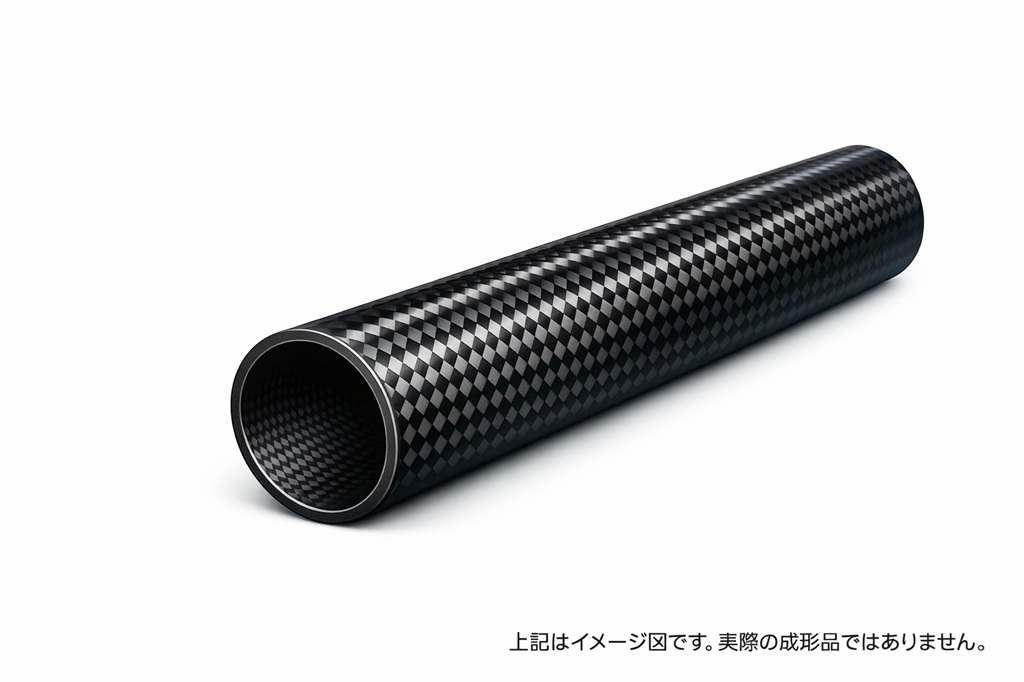
Pipe manufacturing using CFRTP (Carbon Fiber Reinforced Thermoplastics) is gaining attention as a method that combines lightweight properties, high strength, and excellent mass productivity.
The method introduced here utilizes a braided CFRTP preform, combining press molding and air injection to efficiently form pipe shapes. Compared with conventional CFRP pipe manufacturing, this process significantly reduces production time and offers cost advantages.
【Overview of CFRTP Pipe Molding】
Because CFRTP uses a thermoplastic resin matrix, it can be repeatedly softened by heating and hardened by cooling. This characteristic enables fast processing with a press machine.
In this method, a braided CFRTP preform is used. The process begins by wrapping the braided preform around a tube-shaped base material.
Thanks to the flexibility and fiber orientation freedom unique to braided structures:
Strength can be adjusted by controlling winding angles
Uniform pipe structures can be formed
Required rigidity can be secured efficiently
【Molding Process Flow】
The process consists of four main steps:
1. Wrapping the Braided CFRTP Preform
The flexible braided preform is carefully wrapped around a base tube.
By adjusting the fiber orientation during wrapping, the rigidity and strength direction of the pipe can be optimized.
2. Press Molding in a Heated Die
The wrapped assembly is placed in a mold shaped to the desired pipe geometry and hot-pressed.
As the thermoplastic resin softens:
Fibers conform tightly to the mold surface
The outer shape is precisely defined
3. Air Injection
After press forming, air is injected into the interior of the pipe.
This internal pressure:
Stabilizes the inner diameter
Ensures uniform wall thickness
Improves overall rigidity and dimensional accuracy
4. Cooling and Solidification
While still set in the mold, the component is cooled.
As the thermoplastic resin solidifies:
Final strength is established
Shape accuracy is fixed
A lightweight, high-rigidity CFRTP pipe is completed
【Comparison with Conventional Methods】
Carbon fiber pipes are commonly produced using CFRP (Carbon Fiber Reinforced Thermosetting Plastics).
In conventional manufacturing:
Prepreg is wrapped around a mandrel
The assembly is cured in an autoclave
While this method produces high-quality pipes, it requires long heating and curing times, limiting productivity.
In contrast, CFRTP pipe molding:
Utilizes thermoplastic resin properties
Enables short cycle times
Allows rapid press-based processing
Supports continuous production for standardized sizes
Higher productivity directly contributes to cost reduction.
【Application Potential of CFRTP Pipes】
CFRTP pipes offer:
Lightweight construction
High impact resistance
Fast manufacturing speed
Potential applications include:
Mechanical components
Sporting goods
Transportation equipment requiring weight reduction
The braided preform structure allows more flexible fiber orientation design than traditional CFRP pipes, enabling performance customization according to specific application needs.
【Summary】
By combining braided CFRTP preforms, press molding, and air injection, this manufacturing method enables the production of lightweight and high-strength pipes in a short time.
Compared with conventional autoclave molding:
Production efficiency is significantly improved
Manufacturing costs can be reduced
Rapid prototyping and small-lot production are feasible
Although size limitations exist, this process is highly effective for components within a practical dimensional range.
If you are exploring lightweight, high-strength, and cost-efficient pipe solutions, CFRTP pipe molding presents a strong alternative worth considering.
【Contact Information】
Kawamura Kikai Co., Ltd.
Head Office: 2-4 Shimizu-cho, Itabashi-ku, Tokyo 【Composite Division】
Hanazono Factory: 10 Kitane, Fukaya-shi, Saitama 【Metal Press Division】
Website: https://www.kawamura-kikai.co.jp
Inquiry / Quotation: https://www.kawamura-kikai.co.jp/contact/
Please mention that you saw us on “Emidas” when making your inquiry.